
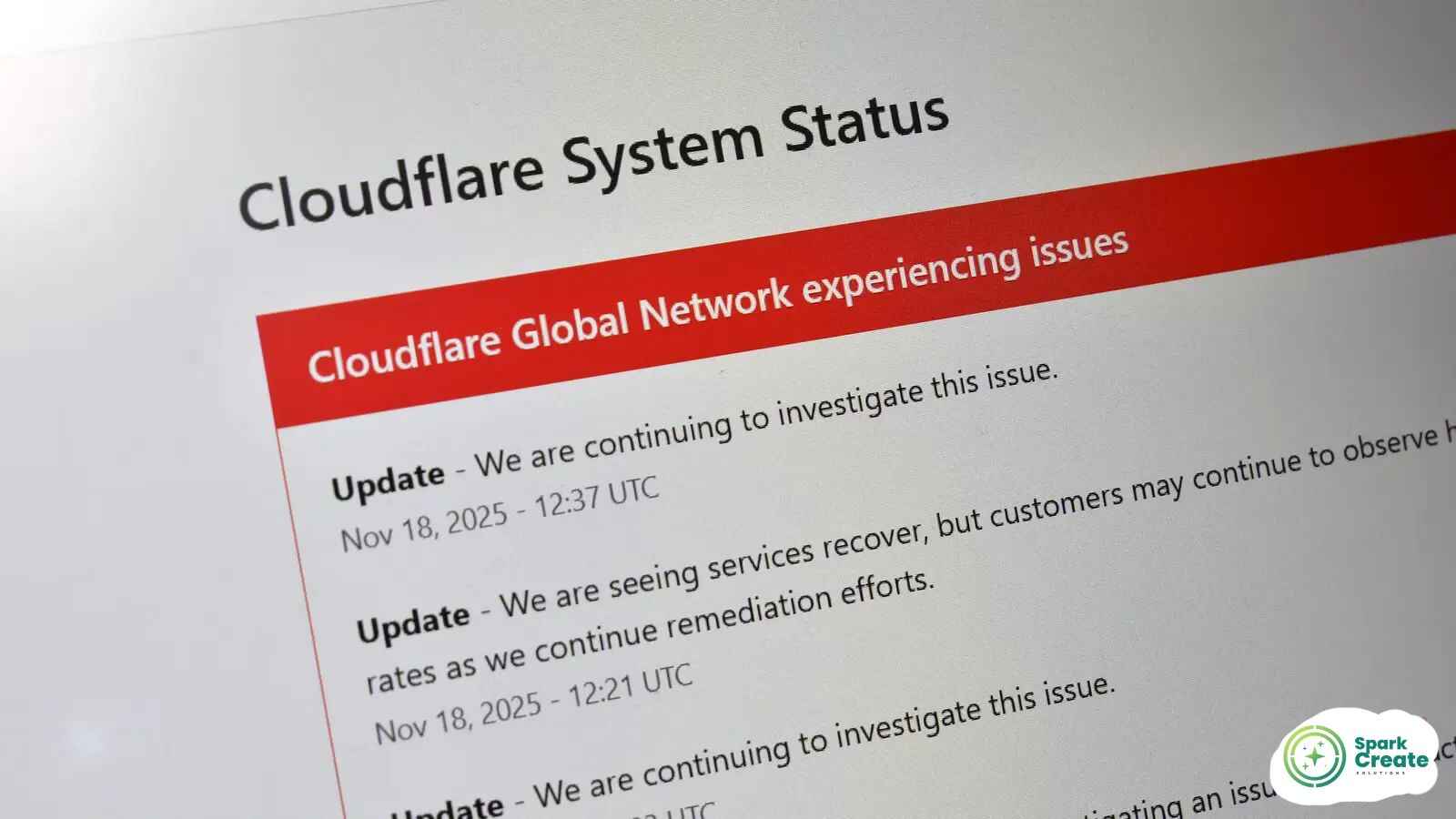
When millions of websites and apps across the world suddenly went down due to a major Cloudflare outage, Nigerian businesses were among those impacted the most. From online stores to fintech apps, enterprise dashboards, and even media platforms, the outage exposed just how dependent modern African businesses are on global internet infrastructure.
This incident wasn’t just “one bad day on the internet” — it was a wake-up call.
In this article, SparkCreate Solutions breaks down what happened, how it affected Nigerian businesses, and what leaders must do to prevent the next outage from bringing operations to a halt.
What Exactly Happened?
Cloudflare — a global provider powering website security, DNS, content delivery (CDN), and performance — experienced an unexpected service disruption that took several major platforms offline.
Services affected globally included:
- Social platforms: Apps like X (Twitter), Facebook, Instagram, where people connect and share content became slow or unavailable during the outage.
- AI tools: Online tools that use artificial intelligence, like ChatGPT and similar AI assistants also experienced loading issues because they use Cloudflare services.
- Media websites: Some news and entertainment websites that publish articles, videos, or reports couldn’t load or showed errors during the outage.
- Thousands of small and medium businesses that depend on Cloudflare services such as online stores, local fintech startups, school portals, and company websites all faced slow pages or full downtime.
Since many Nigerian digital businesses rely on Cloudflare for speed, protection, and uptime, the outage immediately translated into website errors, slow loading, or total downtime.
How Nigerian Businesses Were Impacted
1. E-commerce Stores Lost Sales
Popular Nigerian online stores that rely on Cloudflare reported:
- Failed checkouts
- Slow product pages
- Customer complaints about “Website not loading”
For businesses operating on slim margins, even 30 minutes of downtime can cost millions in abandoned carts.
2. Fintech Apps Experienced Login & Transaction Issues
Many fintech platforms use Cloudflare for:
- API routing: This is how apps send data back and forth. When it fails, apps can’t load information or complete actions.
- Firewall protection: A firewall is a security guard for your website. If it goes down, traffic gets blocked or becomes unsafe.
- Gateway performance: This is the entry point that loads your website. If it slows down, your site becomes slow or won’t open.
During the outage, some customers:
- Couldn’t log in
- Saw delays in verification
- Experienced “error” screens when trying to load dashboards
In a country that increasingly depends on digital banking, this disruption was felt heavily.
3. Business Websites & SaaS Platforms Went Offline
Tech startups and SaaS companies faced:
- 500 internal server errors: This error appears when a website tries to load but the server cannot complete the request. It’s like knocking on a door and the person inside wants to open it but can’t — so you see an error page instead of the website.
- Broken dashboards: A dashboard is the control panel users log into to view their account or data. During the outage, many dashboards couldn’t load fully or showed missing information, making it impossible for businesses or customers to use key features.
- Unreachable landing pages: A landing page is usually the first page customers see when they visit a website. During the outage, some of these pages completely failed to open, showing blank screens or error messages — which means customers couldn’t even reach the business online.
- Reduced customer trust: When customers try to access a website or app and repeatedly meet errors, they may start feeling the business is unreliable or unprofessional. Even if the issue is not the company’s fault, downtime still damages trust — especially for online businesses like fintech, e-commerce, or services.
Since many Nigerian companies rely on their website as their primary sales and customer service channel, the outage directly affected brand reputation.
4. Customer Support Teams Became Overwhelmed
When websites fail:
- Customer inquiries spike
- Social media DMs fill up
- Support agents get overloaded
This happened across the board for Nigerian businesses trying to calm frustrated users.
Why This Outage Hit Nigerian Businesses Hard
Nigerian businesses are increasingly digital. However, many:
- Rely heavily on one provider for uptime
- Do not have failover systems
- Do not use multi-CDN strategies
- Do not have status pages or communication systems for downtime
The Cloudflare outage revealed a vulnerability most companies didn’t even know existed.
Lessons Nigerian Businesses Must Learn
1. Introduce Redundancy & Backup Plans
Avoid relying on a single infrastructure provider.
Options include:
- Multi-CDN setups
- Backup DNS providers
- Failover hosting and routing
2. Implement Real-Time Monitoring
Use tools that alert your team instantly when uptime drops so you don’t find out from angry customers.
3. Create a Business Continuity & Disaster Recovery Plan
This should include:
- Incident response steps: A clear checklist of what your team should do when something goes wrong — so everyone knows the next action.
- Communication templates: Pre-written messages you can quickly send to customers during an outage to keep them informed.
- Routing backups: Backup paths that your website can automatically switch to if the main route stops working.
- Alternative service providers: Other companies that can take over if your main provider (like Cloudflare) has issues, ensuring your site stays online.
4. Communicate Transparently During Outages
Silence kills trust.
Every business should have:
- A public status page
- Automated customer update channels
- Social media outage notices
What This Means for the Future of Nigerian Digital Businesses
This outage shows that:
- Nigeria’s tech ecosystem is growing fast
- Dependency on global cloud providers is rising
- Infrastructure resilience is now a business necessity
As the digital economy expands — fintech, e-commerce, SaaS, education tech, government portals — resilience planning must become part of company strategy, not an afterthought.
At SparkCreate Solutions, we believe outages like this provide an important reminder:
A modern business is only as strong as its infrastructure.
We help businesses build scalable, secure, and resilient systems designed to survive outages, traffic spikes, and security events.
Conclusion
The Cloudflare outage may have lasted just a few hours, but the lessons it revealed will last much longer. Nigerian businesses must evolve from “just being online” to building robust, fault-tolerant digital platforms ready for the future.
If your business wants to implement better security, redundancy, or uptime monitoring, SparkCreate Solutions can help you build systems that stay online — even when the rest of the internet doesn’t.